Chinese Wedding Tea Ceremony: Complete Guide
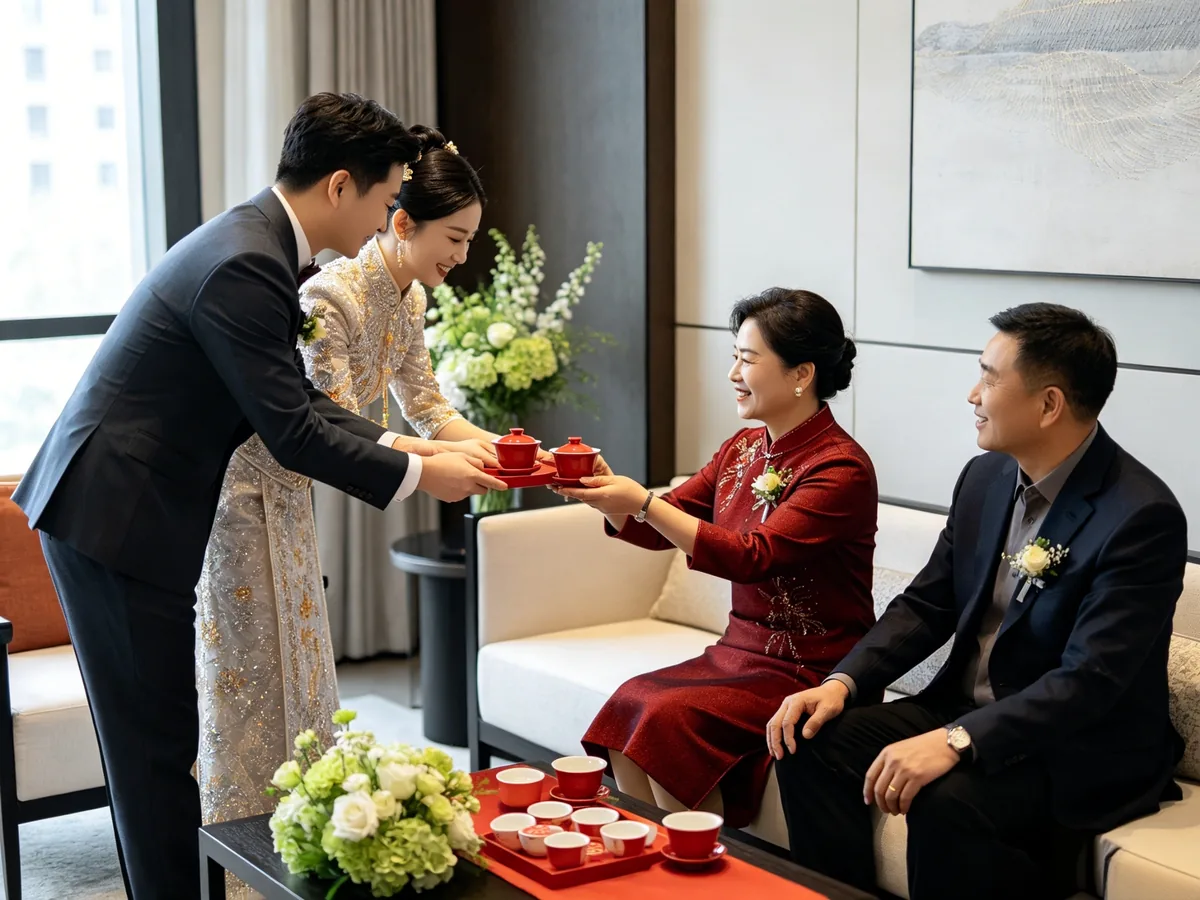
The tea ceremony is the moment a Chinese wedding truly begins — when the couple formally joins both families, honors their parents and elders, and receives their blessings. For many modern couples, especially those raised outside China, it's also the least understood part of the day.
This guide walks through the whole ceremony in order: what it means, what to prepare, who serves tea first, what to say, and how to adapt it for modern and cross-cultural weddings.
1. Why the tea ceremony matters
In Chinese tradition, tea symbolizes purity, stability, and fertility. Serving tea to parents and elders expresses gratitude and respect — and in return, elders accept the couple into the family and give their blessing, often with red envelopes (红包) and jewelry.
Most wedding days include two ceremonies: one at the groom's family home and one at the bride's. In many modern weddings both happen at the same venue — sometimes as a single combined ceremony — which is perfectly fine.
2. What you need to prepare
- Tea set — a teapot and two cups (with saucers) on a red tray, ideally with double-happiness (囍) symbols.
- Tea — oolong, pu-erh, jasmine, or sweet longan-and-red-date tea (红枣龙眼茶), popular in southern China and Southeast Asia.
- Cushions — for kneeling, if you choose the traditional posture.
- Red envelopes and a towel — elders hand over 红包; a small towel lets them wipe the cups between servings.
- Someone to pour — a trusted relative or ceremony assistant who keeps the flow smooth.
3. Who serves tea first
This is the question every family discusses — and the honest answer is: it varies by family, and your family's version is correct. The most common pattern is grandparents first, then parents, then uncles and aunts in seniority order, then siblings or cousins.
Some families serve the groom's parents first, others start with the bride's. What matters is that you agree on the list before the day and write it down in order.
Generate your tea ceremony order free
Enter your family members and get a personalized serving order, ceremony sequence, and role notes.
Open the Free Generator4. What to say
| Moment | English | 中文 |
|---|---|---|
| Serving tea | "Dad / Mom, please drink tea." | 「爸爸/妈妈,请喝茶。」 |
| Thanks | "Thank you for welcoming me into the family." | 「谢谢您把我当作家人。」 |
| Blessing | "May you have a long and happy marriage." | 「祝你们白头偕老,百年好合。」 |
5. Family roles
- Ceremony assistant — pours tea, refills, passes cups, and keeps the order moving.
- Couple — present cups with both hands and receive them back after each elder drinks.
- Elders — sip the tea, offer blessings, and return the cup with a red envelope or gift.
- Photographer — capture one photo per serving group; most families want this.
6. Modern and cross-cultural adaptations
- Standing instead of kneeling — perfectly acceptable, especially in Western-style venues.
- One combined ceremony — both families in one room, served in a single sequence.
- Bilingual explanation — an MC explains each step in English so non-Chinese guests understand.
- Both partners in Western attire — tradition is about respect, not costume.
Get the complete Tea Ceremony Guide — $9
40 pages: order, etiquette, scripts, roles, red envelope context, and mistakes. Includes a free 5-page sample so you can see the quality first.
See the Guide Starter Kit — $29