Chinese Wedding Red Envelope Etiquette
The red envelope (红包 / ang bao) is the most practical tradition in a Chinese wedding — and the one with the most questions: how much, who gives, who receives, and how to hand it over without awkwardness.
This guide covers lucky numbers, typical ranges by relationship, and how to handle the money gracefully.
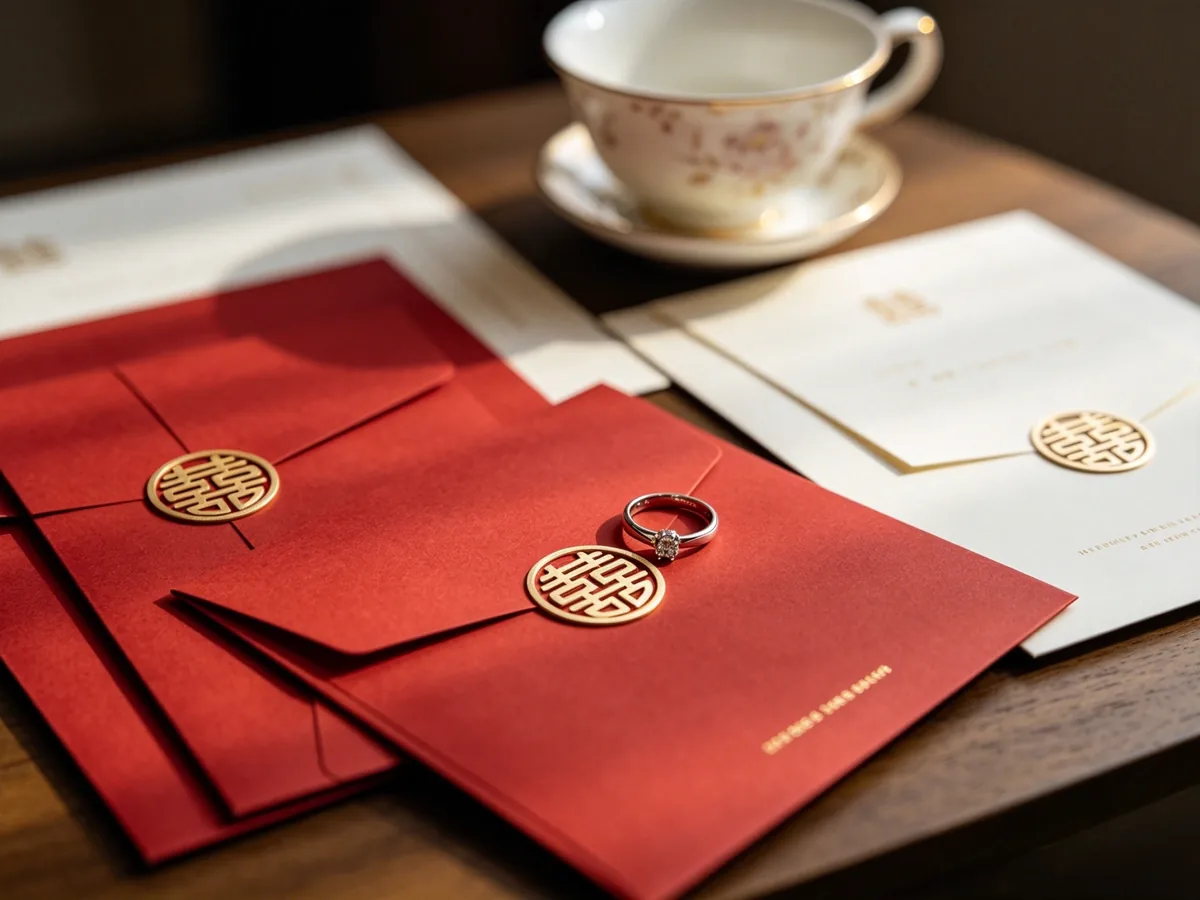
1. Who gives and who receives
- During the tea ceremony — elders give red envelopes to the couple when they accept the tea.
- At the banquet — guests give red envelopes at the reception table (Singapore and Malaysia: ang bao box or guest book).
- Betrothal stage — the groom's family may give 聘金 (pin jing) to the bride's family.
2. Lucky amounts and numbers
- 8 (bā) sounds like "prosperity" — the most popular number.
- 6 (liù) sounds like "smooth" — good for smooth sailing.
- 4 (sì) sounds like "death" — avoid it in amounts and counts.
- Round numbers with lucky endings (88, 168, 888) are common in Singapore and Malaysia.
There is no single "right" amount — it varies by city, family, and relationship. Match what your community expects, and let the blessing matter more than the number.
3. How to handle the money gracefully
- Give crisp, new notes — old or folded notes are less thoughtful.
- Hand the envelope with both hands; receive it with both hands too.
- Don't open the envelope in front of the giver.
- Designate one trusted person to collect and record envelopes at the banquet.
4. Regional differences
Singapore and Malaysia commonly use "ang bao"; mainland Chinese weddings often use 红包 at the tea ceremony and gift money at the banquet; in Australia and Canada, amounts usually reflect the local cost of the banquet. Customs vary by family and generation — when in doubt, ask your partner's family.
Get the red envelope context in full
The Tea Ceremony Guide includes red envelope and gift context, family roles, and the complete ceremony order.
Tea Ceremony Guide — $9 Starter Kit — $29