Chinese Wedding Planning Timeline: 12 Months to the Big Day
A Chinese wedding has more moving parts than a Western one: two families coordinating, a tea ceremony, banquet logistics, lucky dates, and often bilingual guests. Start twelve months out and the whole process stays calm; start at six and you'll survive; start at three and you'll be very busy.
This timeline walks you through every phase — family conversations, dates, venue, tea ceremony planning, invitations, and the day itself — with the exact decisions to make at each stage.
1. 12–9 months out: families, dates, and budget
- Talk to both families about expectations: who hosts what, whether there will be a tea ceremony, and whether a betrothal (过大礼) is planned.
- Choose a lucky date. Many families consult the Chinese almanac or a fortune teller for an auspicious date; check with both sides before booking anything.
- Set a budget — venues, banquet, attire, photographer, and the tea ceremony all add up.
- Start the guest list; Chinese banquets are seated by table, so an early headcount matters.
2. 8–6 months out: venue and vendors
- Book the venue and banquet — popular Chinese wedding dates and weekends sell out 6–12 months ahead.
- Hire your team: photographer, videographer, makeup, MC. A bilingual MC is worth it for cross-cultural weddings.
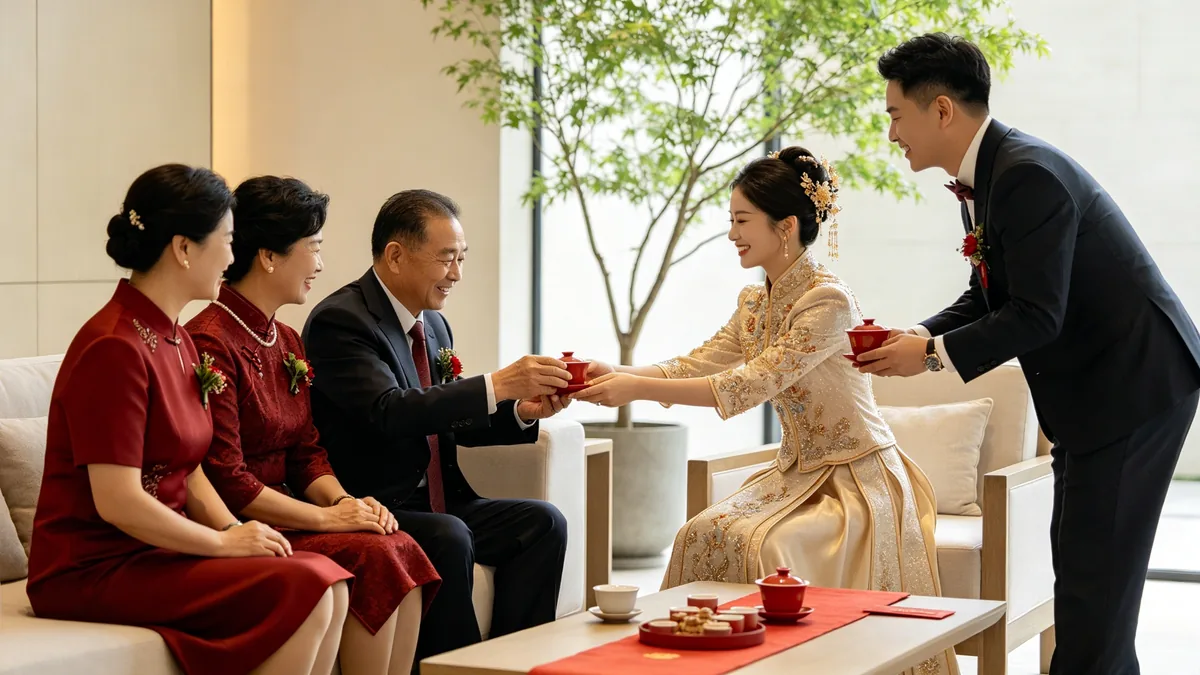
- Plan the tea ceremony: venue or home, serving order, who pours, and props.
- Start outfit planning — qipao or qun kwa for the tea ceremony, Western gown for the banquet.
3. 5–3 months out: invitations and logistics
- Send save-the-dates if guests travel; send formal invitations 6–8 weeks before.
- Confirm the tea ceremony order with both families — write down who serves tea to whom.
- Plan red envelope logistics: who gives, how much, and who collects guest envelopes.
- Arrange seating by table and finalize the head table.
4. 2 months to 3 weeks out: confirmations
- Collect RSVPs and chase late replies — banquet catering counts need to be final.
- Do a menu tasting and confirm dietary needs for international guests.
- Rehearse the tea ceremony once, with the actual people who will pour and receive.
- Prepare red envelopes, script cue cards, and a day-of checklist.
5. Final two weeks
- Confirm every vendor, the venue timeline, and the MC script.
- Pack the tea set, cushions, envelopes, jewelry, and emergency kit.
- Give each family member their role in writing — no one should be guessing on the day.
6. The wedding day
- Morning: hair and makeup, then the tea ceremony — first at the bride's side, then the groom's (or one combined ceremony).
- Afternoon: Western ceremony if planned, then photos.
- Evening: banquet — toasts, yam seng, and the couple circulating to each table.
7. Frequently asked questions
How far in advance should we start planning?
Twelve months is ideal, especially for popular wedding dates. Six months is workable; three months is possible but stressful.
When should we pick the wedding date?
As early as possible — 8–18 months ahead. Lucky dates and prime venues get booked quickly, and both families usually want input.
Do we need a wedding planner?
Not necessarily — families often handle the tea ceremony themselves. A planner helps with bilingual coordination and day-of logistics if your budget allows.
When do invitations go out?
Formal invitations 6–8 weeks before the wedding; save-the-dates 4–6 months ahead for destination or travel-heavy weddings.
8. Budget breakdown example
| Item | Typical share |
|---|---|
| Venue and banquet | 40–50% |
| Attire, hair, and makeup | 10–15% |
| Photography and video | 10% |
| MC, music, and décor | 10% |
| Tea ceremony and extras (red envelopes, props) | 5–8% |
| Contingency | 5–10% |
Banquet costs dominate in every region, so locking the venue early — before décor and attire spending — is the smartest way to keep the budget under control.
9. Tools that keep you on track
- Use the free wedding timeline generator and checklist generator to build your plan in minutes.
- Keep one shared family sheet for the guest list and seating — banquets are seated by table, and last-minute swaps are painful.
- Track red envelopes in a simple spreadsheet: who gives, how much, and when to return the favor.
- The 32-page Wedding Planning Kit turns all of this into a printable workbook with a budget planner and family questionnaire.
10. Common planning mistakes
- Booking the date before checking both families' calendars and the almanac.
- Missing the banquet headcount deadline — venues charge for confirmed seats.
- Skipping the tea ceremony rehearsal.
- No MC script, so the day drifts.
- Leaving outfit changes until the last week.
- Having no red envelope plan for the tea ceremony and helpers.
11. Planning with less than 6 months
If you're starting late, compress deliberately rather than panic. Week one: agree the date with both families and book the venue and banquet — this is the one thing you cannot delay. Month one to two: hire photographer, MC, and makeup; confirm the tea ceremony plan. Month three: send invitations (guests understand a shorter window) and confirm the headcount. Month four to five: final fittings, seating, red envelopes, and a rehearsal. It's tighter than 12 months, but the critical path — date, venue, headcount — is the same.
12. Print this quick view
Keep the essentials on one page: the wedding date and venue, the tea ceremony order (who serves whom, in writing), the banquet start time, the headcount deadline, the MC's phone number, and the red envelope plan. Pin it in your shared family group. When the day arrives, the plan you wrote down is the plan everyone follows — and that single sheet prevents most chaos.
13. Month-by-month at a glance
Month 12 to 9 covers family talks, date, budget, and guest list. Month 8 to 6 covers venue, banquet, vendors, tea ceremony plan, and outfits. Month 5 to 3 covers invitations, seating, red envelope plan, and headcount. Month 2 to 1 covers confirmations, fittings, rehearsal, and the day-of kit. The final week covers vendor confirmations, packing, and role cards for family. Each phase has one or two decisions that unblock everything after it, and those are the ones to protect on your calendar.
14. Dividing tasks as a couple
The cleanest split is by interest, not by culture: one partner owns the venue, banquet, and vendors; the other owns the tea ceremony, red envelopes, and family communication; both co-own the guest list, invitations, and seating. Put every task in a shared sheet with an owner and a deadline, and review it together once a week for twenty minutes. Couples who plan this way report that the wedding itself feels calmer, because nothing arrives as a surprise on the day.
15. The plan is your calm
Weddings rarely go perfectly, but a good plan makes surprises small. When the florist is late or a relative changes the tea ceremony order, you fall back on the sheet you wrote together, adjust once, and keep moving. The couple that planned together stays calm together, and calm is what guests remember most.
Finally, protect one thing in the schedule that is just for the two of you: a quiet breakfast, a walk between ceremonies, or ten minutes alone before the banquet. It sounds small, but it is the memory that grounds the entire day when everything else is a blur.
Get the complete Wedding Planning Kit — $59
32 pages: 12-week timeline, 50+ item checklist, budget planner, family questionnaire, and tea ceremony module.
See the Planner Starter Bundle — $99