What to Wear to a Chinese Wedding: Guest Dress Code & Colors to Avoid
Chinese weddings are formal occasions — think elevated dinner-party dressing, not beach-casual. But beyond the general dress code, color matters more than at most Western weddings: certain colors are reserved for the couple, and a couple of them carry funeral associations you definitely want to avoid.
This guide covers the baseline dress code, which colors to avoid and why, what men and women should wear, and how to dress when the wedding mixes Chinese and Western traditions.
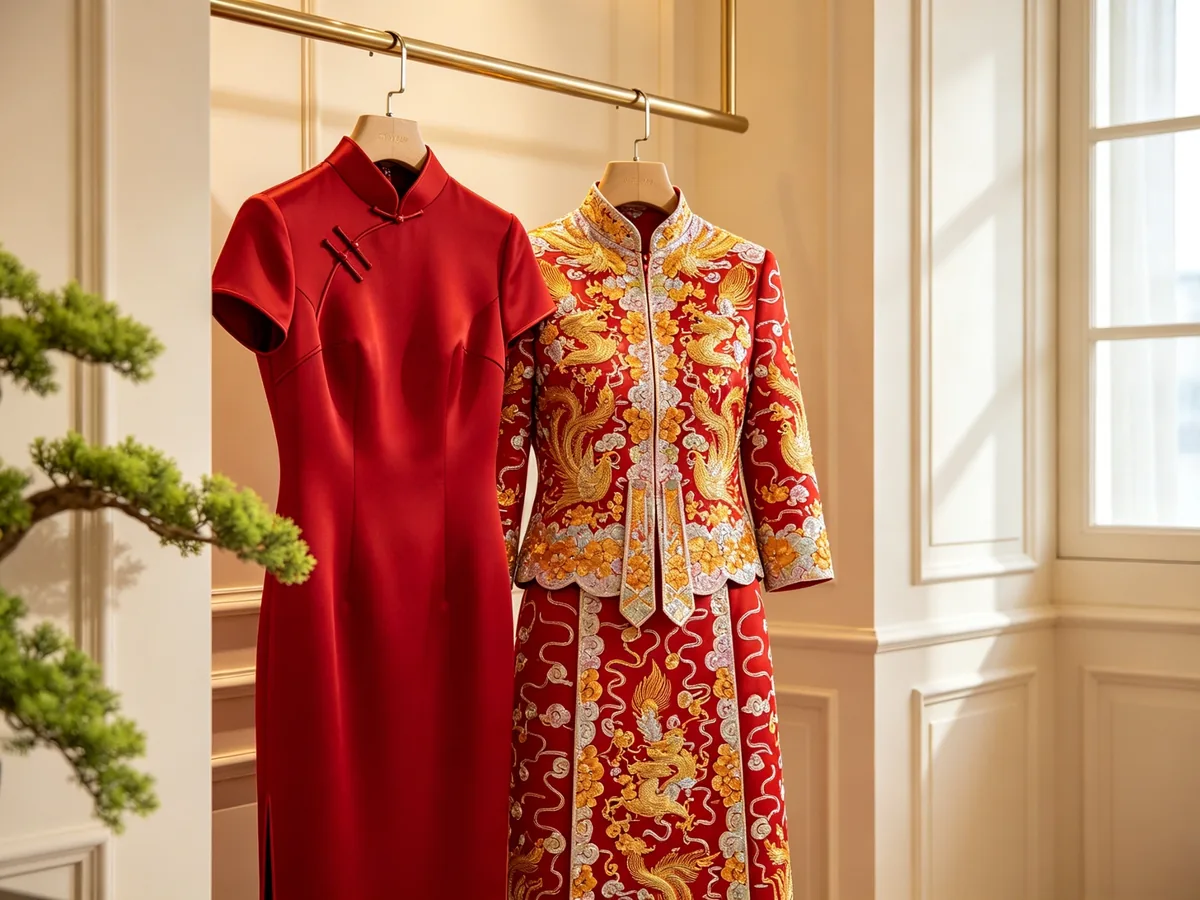
1. The baseline dress code
Most Chinese wedding banquets are semi-formal to formal. When in doubt, dress like you would for an upscale evening event: men in a suit, women in a cocktail-length dress or elegant separates. The invitation usually hints at the dress code — if it doesn't, formal is the safer bet.
2. Colors to avoid
- White — associated with funerals and mourning in Chinese tradition. Women should avoid full white dresses; a white shirt under a suit is fine for men.
- All black — also carries funeral associations. A navy or charcoal suit is fine; skip the all-black outfit, especially for women.
- Full red — red is the bride's color, symbolizing joy and good luck. Avoid wearing head-to-toe red so you don't compete with the wedding party; small red accents are fine.
- Pure white flowers or black accessories — skip if you can; they echo mourning imagery.
Great color choices for guests: blush pink, lavender, soft purple, dusty blue, sage green, and pastel tones. Gold and champagne work beautifully for accessories.
3. What men wear
- A well-fitted suit in navy, charcoal, or dark grey — a white or light shirt and a silk tie.
- Add a subtle celebratory touch: a pocket square, cufflinks, or a tie in a festive tone.
- Loafers or dress shoes, polished. Skip sneakers unless the couple explicitly asked for a casual dress code.
4. What women wear
- A cocktail dress or elegant separates in a guest-appropriate color (pink, purple, blue, green, pastels).
- Chinese guests often wear a qipao — completely appropriate if you own one; choose a color that doesn't clash with the bridal party.
- Avoid overly revealing styles — Chinese banquets skew conservative, and grandparents will be watching.
- Comfortable but polished shoes; banquets include lots of standing, photos, and toasting.
5. Hybrid and overseas weddings
Many Chinese and cross-cultural weddings combine a tea ceremony in the morning with a Western-style ceremony and banquet in the evening. For the tea ceremony, modest, respectful attire in soft colors works best. For the evening reception, you can follow standard Western semi-formal rules — with the color cautions above still in mind, since elders care about them.
6. Frequently asked questions
Can I wear red to a Chinese wedding?
Not head-to-toe — red is the bride's color. Small red accents are fine, but leave the full red dress to the wedding party.
Can I wear white?
Women should avoid full white dresses, since white is associated with funerals. Men in a white shirt under a suit is completely normal.
Is black okay?
A navy or charcoal suit is fine for men. Women should avoid all-black outfits; if black is your only option, brighten it with colorful accessories.
Can I wear a qipao as a guest?
Yes — it's a lovely choice for Chinese guests. Pick an elegant mid-length style in a color that doesn't compete with the bridal party.
7. Tea ceremony vs banquet dressing
If the day includes both a tea ceremony and an evening banquet, plan two looks or one look that works for both. The tea ceremony calls for modest, soft colors and comfortable movement — you'll sit, stand, and kneel. The evening banquet is the formal moment: this is when a cocktail dress or a sharper suit fits best.
8. Venue and season
- Hotel banquet: formal; think evening wear.
- Outdoor garden: cocktail-formal; avoid heels that sink into grass.
- Temple or ancestral hall: conservative — cover shoulders and avoid shorts.
- Summer: light, breathable fabrics; winter: a wrap or shawl (banquet halls run cold with air conditioning).
9. For Western guests
- Wearing a qipao as a guest is fine — just choose a color that doesn't match the bridal party.
- Modest dress codes apply to everyone, including hijab-friendly options; the color rules above still matter.
- Don't comment on the couple's outfit changes ("isn't she changing again?") — multiple changes are traditional and a compliment to the bride.
- If you're unsure about an outfit, ask the couple — they'd rather answer than watch a guest show up in white.
10. Quick guest checklist
- Color-checked against the bridal party (no full red, no white, no all black)
- Formal enough for the banquet venue
- Comfortable shoes for photos and toasting
- Wrap or shawl for air-conditioned halls
- Red envelope ready, name written on it
11. What to wear to the tea ceremony as a guest
If you're invited to the tea ceremony itself, dress a notch more modest than the evening: a knee-length dress or a shirt with long sleeves, in a soft color. The ceremony is intimate and photographed heavily, so avoid anything loud, and remember that elders are the visual center — your outfit should complement, not compete. Men in a suit or blazer are always appropriate, and both partners can skip the full red rule here too.
12. Bags, shoes, and small logistics
Bring a small bag — you'll need somewhere to place your red envelope and any return gifts (many couples give small favors). Choose shoes you can stand in for an hour of receiving lines and photos. If the venue is a temple or traditional hall, expect no seating for some parts; a foldable fan in summer and a light wrap in winter are practical, quiet helpers.
13. When the dress code isn't stated
If the invitation says nothing, assume semi-formal: men in a suit, women in a cocktail dress. Then tune the details to the venue, since a hotel ballroom pushes toward formal, a garden ceremony pulls toward smart-casual, and a daytime tea ceremony leans modest. When in doubt, the safest single choice is a solid, mid-tone outfit in a guest-safe color, with a jacket or shawl that lets you dress up or down as the room reveals itself.
14. One final check before you leave
Color checked against the bridal party, shoes broken in, wrap packed for the air conditioning, red envelope in your bag with your name on it, and your phone charged for photos. If the invitation mentioned a theme or a specific color scheme, honor it. Arrive on time for the tea ceremony if you were invited, and stay through at least the first hour of the banquet, because the couple circulates early and will look for the guests who matter to them.
15. Dress to celebrate, not to compete
Every color rule in this guide exists so that the couple remains the visual center of their own day. When you dress to complement rather than compete, you make the photos better, the elders happier, and the couple more relaxed. That is the real purpose of guest attire, and it is the simplest way to be a great guest at any Chinese wedding.
Get the complete Wedding Etiquette Guide — $39
Dress codes, red envelopes, seating, and tea ceremony etiquette — with a printable cheat sheet.
See the Guide Starter Bundle — $99